
If your team is searching for an aluminum die casting supplier in China, the biggest risk is not unit price. The real risk is selecting a partner that cannot hold quality and delivery once volume ramps up.
This checklist helps procurement and engineering teams shortlist suppliers that can support both pilot builds and long-term production.
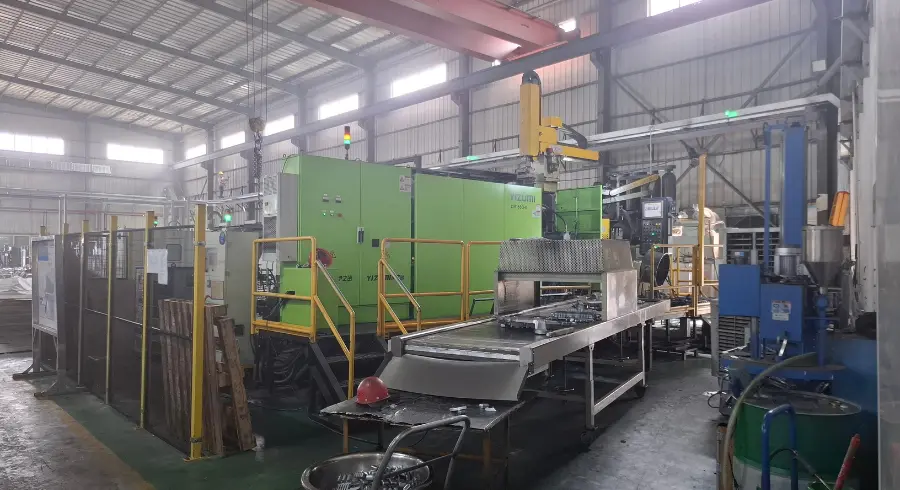
1. Confirm Process Capability Before Price Negotiation#
Ask for objective data first:
- Machine tonnage range and shot size capability for your part family.
- Typical wall thickness window and achievable flatness.
- In-house CNC, CMM, and X-ray availability.
- Vacuum die casting readiness for sealing-critical housings.
If these basics are missing, a low quote usually becomes a high total cost after rework, delays, and warranty exposure.
2. Validate DFM Depth, Not Just a Sales Promise#
A strong supplier should provide a DFM package that includes:
- Gate and overflow strategy.
- Draft, parting line, and ejector pin feasibility.
- Porosity risk zones and machining allowance.
- Recommended alloy path (for example ADC12 vs A380).
Use this benchmark guide: How DFM analysis reduces die casting costs.
3. Audit Quality System for Serial Production#
For automotive, industrial, and e-mobility projects, require evidence of:
- APQP and PPAP execution flow.
- Incoming, in-process, and outgoing control plans.
- Leak test strategy when airtightness matters.
- Corrective action loop with measurable closure time.
Useful reference: IATF 16949 high-tolerance automotive supplier.
4. Review Lead Time Risk From RFQ to SOP#
Do not accept a single “tooling lead time” number. Ask for phase-by-phase timing:
- RFQ response and technical clarification.
- DFM freeze and tool design release.
- T1/T2 trial loops and dimensional closure.
- PPAP approval and SOP handoff.
This timeline approach prevents hidden schedule drift.
5. Compare Quotes on Total Landed Cost#
Build your supplier comparison table around:
- Tooling CAPEX and expected maintenance plan.
- Piece price under realistic scrap assumptions.
- Secondary process cost (CNC, coating, leak test, packaging).
- Logistics model and Incoterms impact.
Cheapest piece price is often not the lowest landed cost.
Quick RFQ Data Pack to Improve Quote Accuracy#
Before sending RFQs, prepare:
- 2D drawing with critical characteristics.
- 3D model (STEP) and assembly context.
- Annual volume by phase (pilot, year 1, year 2).
- Surface finish and leak-tightness requirements.
- Target region and delivery terms.
With complete inputs, quality suppliers can usually return a usable quote and DFM direction much faster.
Related Articles (Internal)#
- Magnesium vs Aluminum Die Casting for EV Housings
- Die Casting Quote Template: RFQ Data That Reduces Revisions
- Die Casting vs CNC Machining: Cost and Lead Time Guide
- Eliminating Sub-Surface Porosity in Aluminum Die Casting
If you want, our team can review your drawing and provide a manufacturability-first quote path with risk notes in 24 hours.